How to Start Decluttering When Overwhelmed: A Calm Way In That Doesn’t Ask Too Much
A gentle, non-urgent approach to starting decluttering when everything already feels like too much.
If you’re feeling overwhelmed by the idea of decluttering, that feeling usually comes before any actual mess is addressed. It shows up as mental weight, not physical chaos. The rooms may be crowded, but what’s louder is the sense that starting will cost more energy than you have.
This is where many articles rush in with motivation or steps. This one won’t. You don’t need to be convinced, organized, or ready. You don’t need to see your home as a problem to be fixed. Feeling overwhelmed doesn’t mean you’ve failed at decluttering. It usually means you’ve been carrying too much for too long.
Often, overwhelm forms because decluttering has been framed as a big event. A project. Something that requires decisions, stamina, and follow-through. When your life already feels full, adding another “thing to do” can make even helpful ideas feel intrusive.
So before anything else, it helps to quietly change what decluttering means in this moment. Not a task. Not a plan. Just a gentle noticing of where your energy tightens when you think about your space.
This isn’t about getting yourself to start. It’s about letting your nervous system settle enough that starting no longer feels like a threat. When that happens, movement becomes possible without force.
Why Overwhelm Is Often a Timing Issue, Not a Personal One
Overwhelm is usually interpreted as a lack of discipline or clarity. In reality, it’s more often a signal about timing. Decluttering asks for decision-making, and decision-making draws from the same mental reserves used for work, caregiving, and daily problem-solving.
When those reserves are already low, even small choices can feel unmanageable. This is why advice that works beautifully at one stage of life can feel impossible at another. The method didn’t suddenly stop working. Your context changed.
There are seasons where holding steady is the most reasonable thing you can do. During those times, pushing yourself to declutter can create friction rather than relief. The mind resists not because it’s lazy, but because it’s protecting itself from overload.
Seeing overwhelm as a timing issue removes the subtle self-criticism that often sneaks in. You’re not behind. You’re not avoiding something you “should” want to do. You’re responding appropriately to the demands already placed on you.
Once this is understood, the question shifts. Instead of asking how to push through overwhelm, it becomes easier to ask what level of engagement your life can support right now. That answer is allowed to be small. It’s allowed to be quiet. It’s allowed to change later.
Separating the Idea of Decluttering From the Act of Letting Go
For many people, the word decluttering immediately brings up images of bags, bins, and decisions. But the internal experience often begins much earlier, with tension. A drawer you avoid. A shelf that makes you sigh. A room you don’t quite enter fully.
These reactions happen before any action is taken. They’re signals, not instructions. You can notice them without responding to them right away. This separation matters because it lowers the sense of urgency that fuels overwhelm.

You don’t have to move anything to begin decluttering. You can start by simply observing where your attention catches and where it pulls away. This kind of noticing doesn’t require energy in the same way decision-making does.
When decluttering is reduced to throwing things out, it feels irreversible and high-stakes. When it’s reframed as understanding your relationship with your space, it becomes more flexible. Nothing has to happen today. Nothing has to be finalized.
This approach creates breathing room. It allows your mind to stay present instead of jumping ahead to imagined effort. Over time, clarity forms naturally, without being forced. And clarity, when it arrives gently, tends to last longer.
How Starting Smaller Than You Think Builds Trust With Yourself
Most people overestimate what “starting” needs to look like. They imagine momentum, visible progress, and a sense of completion. When those aren’t available, they conclude they aren’t ready.
But readiness often follows action, not the other way around. And action can be so small it barely registers as effort. A single surface. One object returned to where it belongs. One item released without ceremony.
What matters here isn’t impact. It’s trust. Each time you engage with your space in a way that doesn’t exhaust you, your nervous system learns that decluttering doesn’t automatically lead to depletion.
This kind of trust-building is quiet. There’s no dramatic shift. But the internal resistance softens. The next small action feels less charged. Over time, the idea of decluttering loses its edge.
Starting smaller than you think isn’t a strategy for getting more done later. It’s a way of staying connected to yourself now. When your system feels respected, it becomes more willing to participate.
There’s no need to track progress or measure results. The change happens internally first. The external changes come as a byproduct, at their own pace.
Letting Go of the Need to Feel Motivated Before You Begin
Motivation is often treated as the gateway to action. In practice, it’s unreliable, especially when you’re overwhelmed. Waiting to feel motivated can keep you stuck in a loop where nothing feels possible.
Instead of motivation, it helps to focus on neutrality. Not excitement. Not resolve. Just a sense that what you’re considering won’t make things worse.
Neutral actions are easier to approach. They don’t ask you to care deeply or commit fully. They simply exist as options. You can take them or leave them without consequence.
This is especially important when decluttering has a history of feeling loaded or emotional. Reducing the emotional charge makes engagement safer. Safer actions are more repeatable.
You don’t need to want to declutter. You don’t need a vision of a finished space. You only need to notice one small interaction with your environment that feels tolerable.
From there, things unfold naturally. Not quickly. Not dramatically. But steadily enough to matter.
Why Decision Fatigue Makes Decluttering Feel Impossible
When decluttering feels overwhelming, it’s often less about the amount of stuff and more about the number of decisions hiding inside it. Every object asks a quiet question. Keep or let go. Here or somewhere else. Now or later. Those questions add up quickly.
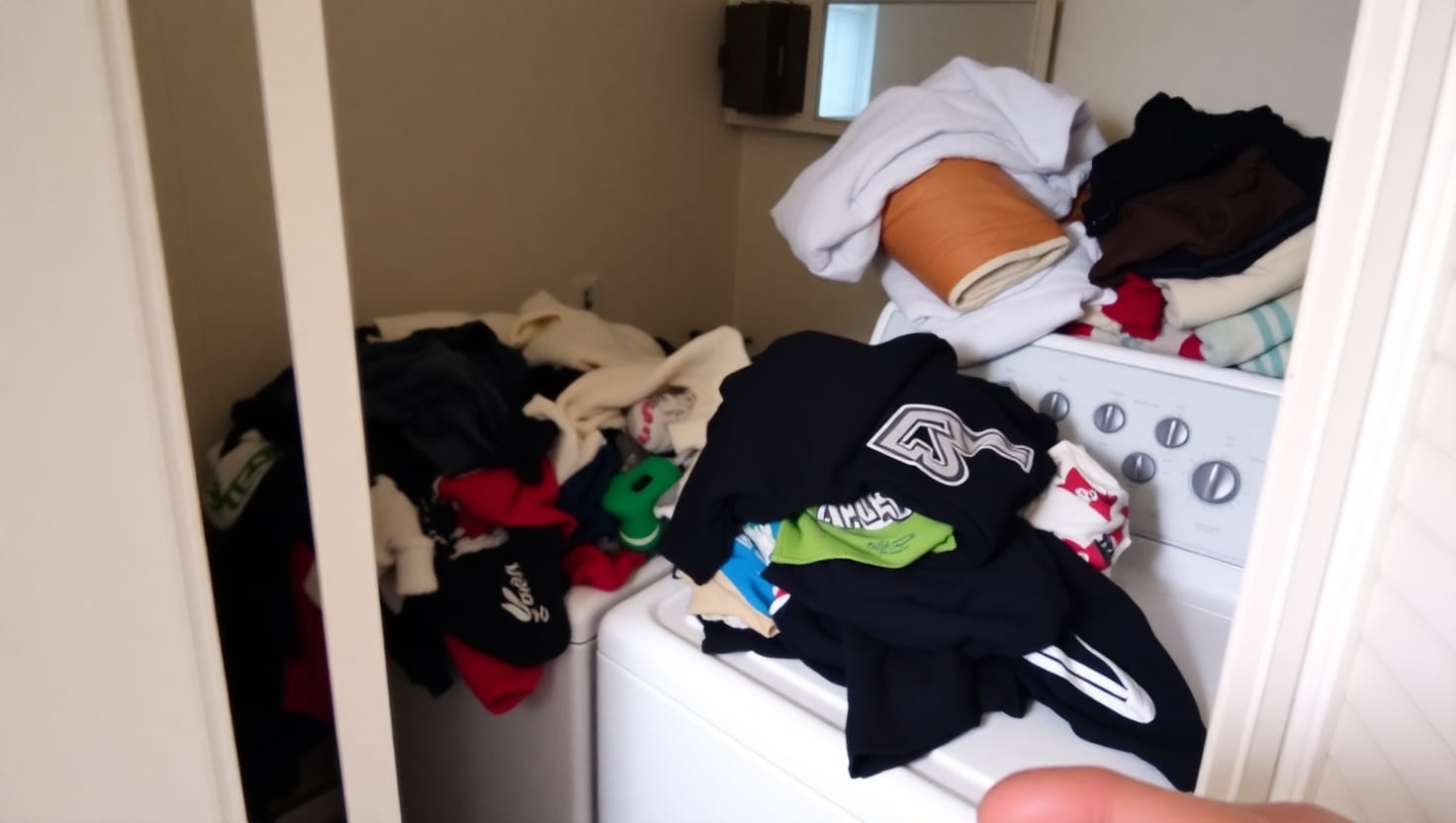
Decision fatigue doesn’t announce itself clearly. It shows up as irritability, avoidance, or a sudden need to do anything else. You might tell yourself you’ll start later, when you have more time or energy. But what you’re really waiting for is a moment when your brain isn’t already tired.
This is why decluttering can feel harder than expected, even in small spaces. The mental work is front-loaded. Before anything changes physically, you’re already spending cognitive energy evaluating, remembering, and imagining consequences.
Understanding this changes how you approach starting. It’s not about pushing past resistance. It’s about reducing the number of decisions you ask yourself to make at once. Fewer questions mean less strain. Less strain means you’re more likely to stay present.
This doesn’t require a system or rules. It begins by noticing where decisions cluster. Closets, papers, sentimental items. These areas aren’t failures. They’re decision-dense zones.
Approaching them gently, or even indirectly, respects how your mind actually works. When decision fatigue is acknowledged instead of ignored, overwhelm loses much of its power.
How Visual Noise Affects Your Energy Before You Realize It
Visual clutter isn’t just about what you see. It’s about what your brain has to process without your permission. Every exposed surface sends small signals competing for attention, even when you’re not consciously focusing on them.
Over time, this low-level stimulation adds to exhaustion. You may not feel stressed in a dramatic way, but you might feel restless or unsettled in your own space. That discomfort often gets mislabeled as laziness or lack of motivation.
The important thing to understand is that your reaction is reasonable. Human attention wasn’t designed to rest in busy environments. When your surroundings are visually loud, your nervous system stays slightly alert, even when you want to relax.
This is why decluttering doesn’t always start with sorting or organizing. Sometimes it starts with reducing what’s in your direct line of sight. One clear surface can change how a room feels more than a full afternoon of effort in a hidden area.
You don’t need to create emptiness. You’re simply giving your eyes fewer things to track. That small reduction can create a noticeable sense of calm, which makes further engagement feel less demanding.
When your space asks less of you visually, your energy has a chance to recover. From there, gentle progress becomes more accessible.
The Role of Identity in What Feels Hard to Let Go Of
Some items are difficult to release not because you need them, but because they represent versions of yourself. Hobbies you intended to return to. Clothes from a different season of life. Objects tied to who you were or hoped to be.
When decluttering brings these items to the surface, the discomfort isn’t about stuff. It’s about identity. Letting go can feel like closing a door, even if that door hasn’t been opened in years.

This is where overwhelm deepens. The task shifts from practical to emotional, often without warning. If you’re not prepared for that shift, it can feel safer to stop entirely.
You don’t have to resolve these questions to keep moving. You’re allowed to acknowledge the complexity without acting on it. Naming an item as identity-linked is often enough to soften its grip.
There’s no requirement to decide what stays forever. Decluttering doesn’t have to mean redefining yourself. It can simply reflect who you are right now, without invalidating who you’ve been.
When identity is treated with care, decluttering becomes less confrontational. You’re not erasing parts of yourself. You’re making space for the present to breathe.
Why Momentum Isn’t the Goal When You’re Overwhelmed
A lot of decluttering advice centers on momentum. Start strong. Keep going. Ride the wave. When you’re already overwhelmed, this framing can feel intimidating rather than helpful.
Momentum assumes excess energy. It suggests that once you begin, things will get easier. For some people, that’s true. For others, sustained effort quickly leads to burnout.
If your system is sensitive or already taxed, consistency matters more than speed. Short, contained interactions with your space are often more sustainable than big pushes that leave you depleted.
Letting go of the idea of momentum can feel counterintuitive. It might seem like you’re lowering expectations too far. In reality, you’re aligning effort with capacity.
This approach reduces the emotional stakes of each session. You don’t have to capitalize on motivation while it’s there. You don’t have to worry about losing progress. Each interaction stands on its own.
Over time, this builds a different kind of relationship with decluttering. One based on steadiness rather than intensity. When overwhelm is present, that steadiness is what allows change to continue without cost.
Creating Emotional Safety Before You Touch Anything Physical
Before decluttering can happen externally, it often needs to feel safe internally. Emotional safety doesn’t mean feeling confident or positive. It means knowing that whatever happens, you won’t push yourself past what you can handle.
This starts with permission. Permission to stop. Permission to leave things unfinished. Permission to decide later. These internal agreements reduce the pressure that makes starting feel risky.
When emotional safety is present, curiosity can replace avoidance. You might open a drawer just to look. You might pick something up without deciding its fate. These moments count, even if nothing changes visibly.
Safety also comes from neutrality in your self-talk. Avoid labeling your space or habits in harsh terms. Describing rather than judging keeps the emotional temperature low.
Decluttering doesn’t require bravery. It requires gentleness. When your system trusts that you won’t force outcomes, it becomes more willing to engage.
From that place, action arises naturally. Not as a demand, but as a quiet option you can accept or decline. That choice is what makes progress sustainable.
How External Pressure Can Quietly Increase Resistance

Sometimes the overwhelm doesn’t originate inside you at all. It comes from outside expectations that have slowly crept into how decluttering is framed. Advice from friends, family comments, social media images, or even well-meaning articles can create a sense that there’s a right way to do this.
That pressure often shows up as comparison. Other people seem to move faster, let go more easily, or maintain calmer homes. Even when you don’t consciously measure yourself against them, your body may register the implied standard.
When decluttering feels evaluative, resistance grows. Your system senses that any action might be judged, even if the only judge is an internalized voice. In response, it pulls back.
This is why it can help to temporarily reduce outside input. Not forever. Just enough to hear your own pace again. Decluttering doesn’t need witnesses. It doesn’t need validation. It can be something that happens quietly, without commentary.
Removing imagined audiences often lowers the emotional stakes. You’re no longer trying to prove competence or commitment. You’re simply interacting with your space as it is.
When external pressure loosens its grip, decluttering can return to being personal rather than performative. That shift alone can make starting feel less charged.
The Difference Between Organizing and Decluttering When You’re Tired
When energy is low, organizing and decluttering can blur together. They’re often talked about as if they’re interchangeable, but they ask for different kinds of effort. Organizing requires planning, categorizing, and maintaining systems. Decluttering asks for discernment.
If you try to organize when you’re already overwhelmed, it can backfire. Systems feel heavy. Decisions multiply. You may end up moving things around without relief.
Decluttering, in its gentlest form, is simpler. It’s about noticing what no longer needs to be there. Not where everything should go. Just what doesn’t belong anymore.
This distinction matters because many people delay starting until they feel ready to “do it properly.” That usually means organizing. But waiting for that level of energy can keep you stuck.
You’re allowed to declutter without organizing afterward. A drawer with fewer items but no perfect system is still lighter than before. That lightness counts.
When you separate these two processes, pressure drops. You don’t have to solve your space. You only have to relate to it a little more honestly than before. That honesty, when done gently, is often enough to create movement.
Why Neutral Spaces Matter More Than Perfect Ones
A common hidden barrier to starting is the belief that the end result should feel inspiring. Calm, minimal, beautiful. While those outcomes are appealing, aiming for them too early can create distance from where you are now.
Neutral spaces are more accessible. They don’t demand admiration. They simply don’t ask much of you. A neutral space might not look styled or intentional, but it feels easier to exist in.
When you focus on neutrality instead of perfection, decluttering becomes less loaded. You’re not trying to transform your home into something aspirational. You’re just trying to reduce friction.

This shift also reduces disappointment. If the goal is perfection, anything short of that feels lacking. If the goal is neutrality, even small changes succeed.
Neutrality supports rest. It allows your attention to settle instead of scanning for what’s missing. Over time, that rest can naturally lead to clearer preferences and more intentional choices.
Starting with neutrality respects your current capacity. It doesn’t require vision or enthusiasm. It simply offers a quieter baseline. From there, anything else is optional.
How Avoidance Can Be a Form of Self-Protection
Avoiding decluttering is often framed as procrastination. In reality, avoidance can be protective. If past attempts have led to exhaustion, regret, or emotional overwhelm, your system may associate decluttering with harm.
That association doesn’t disappear just because you want change. It needs to be gently updated through new experiences that feel safe.
Seeing avoidance as information rather than failure changes how you respond to it. Instead of pushing harder, you can ask what feels risky about starting. The answer might be time, emotion, or fear of making the wrong decision.
You don’t need to eliminate avoidance to move forward. You can work with it. Taking actions so small they don’t trigger the alarm allows trust to rebuild.
Over time, your system learns that decluttering doesn’t always lead to depletion. That learning is gradual. It can’t be rushed.
When avoidance is respected, it often softens on its own. Not because it was defeated, but because it was understood. That understanding creates the conditions for gentler engagement.
Allowing Decluttering to Be Incomplete on Purpose
One of the quiet reasons decluttering feels overwhelming is the expectation of completion. Finishing a room. Clearing a category. Reaching a stopping point that feels definitive.
When completion is the goal, starting feels heavier. There’s an implied contract to see it through, even if your energy shifts. That pressure alone can keep you from beginning.
Allowing decluttering to be incomplete changes the tone entirely. You can touch a space without resolving it. You can make partial decisions. You can stop mid-way without needing a reason.
This approach aligns with how real life works. Energy fluctuates. Attention shifts. What feels clear one day may feel murky the next. Incompleteness accommodates that reality.
Incomplete decluttering still has value. Fewer items remain. Awareness increases. Your relationship with your space evolves, even without a clear endpoint.
When you release the need to finish, you gain permission to engage. Engagement, even briefly, is what creates change over time.
Decluttering doesn’t have to move in straight lines. It can pause, circle back, and unfold slowly. That flexibility is often what makes it sustainable.
When Decluttering Stops Feeling Temporary
For many people, the hardest part isn’t starting. It’s the quiet disappointment that comes when progress fades and clutter slowly returns. That experience can make even gentle attempts feel pointless, as if nothing really holds.
There’s often a missing layer here that has nothing to do with effort or discipline. It has to do with alignment—between your energy, your life, and the way decluttering is approached. When those pieces don’t match, even good intentions slide away.

Understanding what allows decluttering to stay settled, rather than restarting over and over, takes time. It’s less about doing more, and more about finding an approach that finally fits.