Declutter Your House in a Weekend (Without Burning Out or Starting Over Again)
A calm, realistic way to think about a weekend declutter that works with your energy, not against it.
The idea to declutter your house in a weekend usually appears when things already feel too full. Not just the rooms, but your head. You notice it when you can’t find what you need, when every surface feels busy, or when even small tasks carry extra weight. A weekend feels like a clean edge. Two days. Contained. Possible.
What often gets missed is why this idea pulls so strongly. It’s not about speed. It’s about relief. The hope is that a focused window will finally quiet the low-level stress that’s been humming in the background. That’s a very human instinct, and it doesn’t mean you’re unrealistic or behind.
This is also where many decluttering plans quietly go wrong. They treat a weekend like a test of discipline instead of a container for attention. They assume energy is unlimited for 48 hours. They assume decisions get easier as the hours pass. For most people, the opposite is true.
It helps to gently reframe what a weekend can actually hold. A weekend is not a reset button for your entire life. It’s a pause. A chance to reduce friction in a way that’s noticeable enough to matter, but contained enough to recover from.
When you think about decluttering your house in a weekend this way, the pressure softens. You’re no longer trying to fix everything. You’re creating a small pocket of space where things can feel lighter than they did on Friday.
That shift alone changes how the weekend unfolds.
What a weekend can realistically hold (and what it can’t)
One of the quiet sources of frustration in weekend decluttering is asking the weekend to do more than it can. A weekend can support focused attention, physical movement, and a finite number of decisions. It cannot support endless sorting, emotional processing of every item you own, and perfection.
When people imagine decluttering their house in a weekend, they often picture a dramatic transformation. Every drawer resolved. Every closet finished. That image brings a surge of motivation, but it also sets up an invisible deadline your nervous system can feel. Once that pressure is in place, fatigue shows up faster.
A more realistic view is steadier. A weekend can hold progress that you can see and feel. It can hold clearing the obvious excess. It can hold creating breathing room in key areas. It can even hold the beginning of new habits. What it can’t hold is a complete overhaul of how you relate to your belongings.
This doesn’t make a weekend declutter less worthwhile. It makes it more effective. When expectations match capacity, momentum lasts longer. You stop rushing. You make cleaner decisions. You leave energy for Monday.
It’s also important to name that weekends already carry weight. Errands, rest, family needs, and recovery from the week are already competing for space. Decluttering has to fit into that reality, not override it.
Seeing a weekend as a supportive container rather than a finishing line makes it easier to engage without bracing yourself. You’re not proving anything. You’re simply using the time that’s available in a way that reduces strain instead of adding to it.

The hidden cost of all-or-nothing weekend plans
All-or-nothing plans are appealing because they promise closure. If you declutter your house in a weekend and finish, you don’t have to think about it anymore. That’s the promise, anyway. The cost is usually paid halfway through Saturday.
These plans tend to stack decisions without recovery time. Every item becomes a question. Every question pulls on attention. By the time fatigue sets in, the environment is messier than when you started, and quitting feels like failure instead of information.
What’s often overlooked is that decision fatigue isn’t a mindset issue. It’s a biological one. When the brain is tired, it looks for shortcuts. That’s when piles get shoved aside, “maybe later” boxes multiply, and frustration rises. None of this means you did anything wrong.
All-or-nothing plans also leave no room for adjustment. If something takes longer than expected, the entire plan feels compromised. That rigidity creates urgency, and urgency makes decluttering harsher than it needs to be.
A softer approach doesn’t mean slower progress. It means fewer emotional spikes. When the plan allows for stopping points, the work stays contained. You can walk away without feeling like you abandoned something important.
If your past attempts to declutter your house in a weekend ended in exhaustion or avoidance, it’s worth noticing the structure rather than blaming yourself. The structure asked for sustained intensity without rest.
Changing the structure changes the experience. The work can still be meaningful. It just doesn’t have to be punishing.
Choosing focus instead of coverage
One of the most stabilizing choices you can make when planning to declutter your house in a weekend is choosing focus over coverage. Coverage tries to touch everything. Focus chooses a few areas that will noticeably reduce daily friction.
Focus works because clutter stress isn’t evenly distributed. Some spaces quietly drain energy every day, while others are just visually busy. When you relieve pressure in the right places, the whole house feels calmer, even if many areas remain untouched.
This approach also simplifies decision-making. When you know which spaces matter most right now, you’re less likely to wander. Wandering is where time disappears and overwhelm grows. Focus keeps the work contained.
Another benefit of focus is psychological. Finishing something matters. Even finishing something small. Completion gives your brain a signal that the effort led somewhere. That signal makes it easier to continue later, even if “later” is weeks away.
Coverage, on the other hand, spreads attention thin. You might technically touch many rooms, but nothing feels resolved. The visual noise remains, and the sense of relief you were hoping for never quite arrives.
Choosing focus doesn’t require a perfect strategy. It simply asks one quiet question: where would a little less stuff make everyday life easier? That answer is usually obvious once you pause long enough to listen.
A focused weekend doesn’t try to impress anyone. It supports how you actually live in your space.

Letting go without forcing decisions
One of the reasons weekend decluttering feels heavy is the assumption that every item must be fully decided. Keep or discard. Now or never. That pressure turns ordinary objects into emotional negotiations.
Letting go works better when it’s paced. Some items are easy. They leave without a second thought. Others carry memory, money, or identity. Expecting the same decision speed from both is a quiet form of self-pressure.
When you’re decluttering your house in a weekend, it helps to separate movement from meaning. Movement clears space. Meaning takes time. Not everything has to be resolved for progress to count.
This doesn’t mean creating endless “unsure” piles. It means allowing a small, contained category for items that require more reflection than a weekend can reasonably provide. Giving those items a temporary home prevents them from hijacking your energy.
There’s also value in noticing what you don’t need to decide yet. Some things become clearer once surrounding clutter is gone. Space itself provides information. You don’t have to extract that information on demand.
Letting go isn’t an act of willpower. It’s a response to clarity. The more clarity you create through gentle progress, the less force is required.
A weekend can support that clarity if you let it. It doesn’t have to resolve every question to be worthwhile.
Using energy patterns instead of fighting them
A weekend declutter often fails not because the plan is bad, but because it ignores how energy actually moves through the day. Most people don’t have steady focus from morning to night. There are natural rises and drops, and those shifts matter when you’re making decisions.
Trying to power through low-energy hours with high-stakes decluttering creates resistance. That’s when frustration shows up, even if motivation was strong earlier. Working with energy instead of against it keeps the process calmer.
High-energy windows are better suited for decisions that require judgment, like sorting categories or letting go of emotionally neutral items. Lower-energy windows work better for physical tasks that don’t require much thinking, such as moving items, wiping shelves, or putting like with like.
This approach removes the quiet pressure to be “on” all day. You’re not asking your brain to perform the same way at 9 a.m. and 4 p.m. You’re adapting the work to your capacity in the moment.
It also helps prevent the spiral where fatigue gets mistaken for failure. If energy drops, that’s information, not a flaw. Adjusting tasks instead of quitting entirely allows progress to continue without strain.
Decluttering your house in a weekend becomes less about endurance and more about rhythm. You’re listening, responding, and staying within a range that feels sustainable.
That responsiveness is often what makes the difference between stopping in frustration and finishing the weekend feeling steadier than when you started.
Creating visible relief early on
One of the most supportive things you can do during a weekend declutter is to create visible relief early. Not because appearances matter, but because the brain relaxes when it sees change.
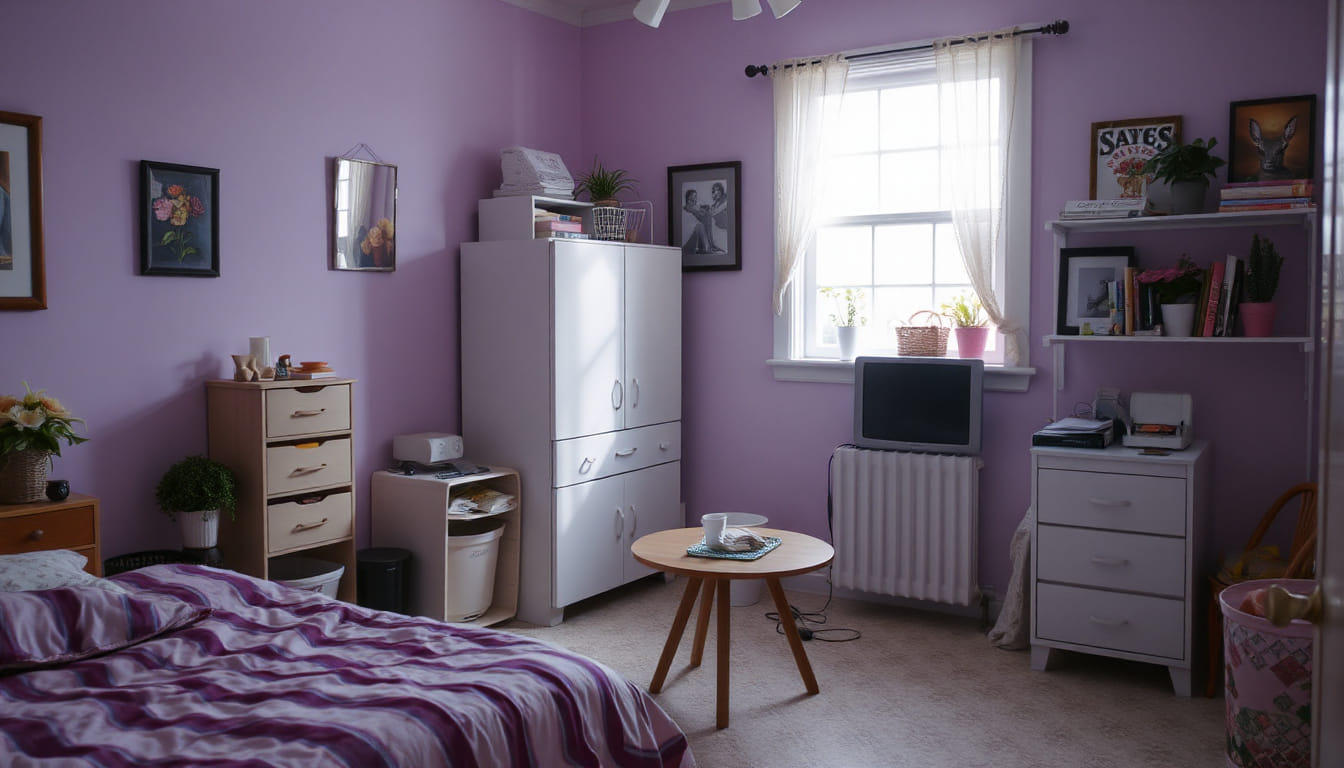
Visible relief usually comes from addressing surfaces and entry points first. These areas collect clutter quickly and signal disorder even when the rest of the space is functional. Clearing them creates an immediate sense of calm that carries into the rest of the work.
This isn’t about avoiding deeper areas. It’s about setting a tone. When the environment looks lighter, decisions feel less loaded. You’re no longer working inside visual noise.
Early relief also builds trust with yourself. You see that effort leads to change, which makes it easier to continue without forcing momentum. The work starts to feel responsive rather than demanding.
There’s a subtle emotional shift that happens when clutter recedes from view. Breathing deepens. Shoulders drop. The nervous system registers safety. That shift is not trivial. It supports better judgment and steadier pacing.
When decluttering your house in a weekend, it’s easy to dive into the hardest area first out of determination. Often, it’s kinder to let ease lead. Relief first. Complexity later.
That order doesn’t diminish the work. It makes the rest of it more possible.
The role of containment during a short declutter
Containment is one of the least discussed but most important elements of a successful weekend declutter. Without containment, progress leaks. Items migrate. Half-made decisions linger in view and add to mental load.
Containment means giving everything you touch a temporary or permanent place before moving on. That place doesn’t have to be perfect. It just needs to be defined. This prevents the sense that clutter is multiplying as you work.
During a short declutter, containment also protects your attention. When items are corralled, your eyes aren’t constantly pulled to unfinished business. You can focus on the task at hand without scanning the room for loose ends.
This is especially important when energy dips. A contained space feels manageable even when you pause. An uncontained space feels chaotic and unfinished, which can make it harder to return.
Containment also creates natural stopping points. When a container is full or a surface is cleared, the work has a clear edge. You can stop without mentally carrying the rest of the project with you.
Decluttering your house in a weekend benefits from these edges. They allow you to rest without guilt and resume without reorienting from scratch.
Clear edges are not about control. They’re about reducing cognitive noise so the work stays kind.
Why stopping before exhaustion matters
There’s a strong cultural message that finishing what you start requires pushing through fatigue. In decluttering, that belief often backfires. Exhaustion narrows thinking and makes decisions feel heavier than they are.
Stopping before exhaustion is a form of preservation. It keeps the work associated with clarity rather than depletion. That association matters long after the weekend ends.
When you stop while things still feel manageable, your brain records the experience as safe. Returning later doesn’t trigger dread. It feels like a continuation rather than a restart.

This is especially important if you’re decluttering your house in a weekend with the hope of building longer-term change. One punishing experience can undo weeks of intention. A contained, humane experience builds trust instead.
Stopping early also honors the fact that rest is part of progress. The nervous system needs time to integrate change. Pauses allow that integration to happen.
There’s no reward for finishing at the edge of collapse. The cost often shows up later as avoidance or resentment toward the space you worked so hard to improve.
Choosing to stop while you still have a little energy left is not quitting. It’s setting the conditions for future ease.
Leaving things easier than you found them
A helpful measure for a weekend declutter is not how much you removed, but whether things are easier than they were before. Easier to find what you need. Easier to move through rooms. Easier to reset after daily life.
This lens removes comparison and replaces it with continuity. You’re not aiming for a finished state. You’re creating a gentler baseline.
When you focus on ease, you naturally make different choices. You prioritize access over aesthetics. You value space over optimization. You notice where friction used to be and whether it has softened.
This perspective also makes it easier to stop. Once ease has increased, the weekend has already done its job. Anything beyond that is optional, not required.
Decluttering your house in a weekend doesn’t have to mean dramatic transformation to be worthwhile. Subtle shifts often have the greatest impact on daily life.
When Monday arrives, you’re not left with a sense of something unfinished hanging over you. You’re left with rooms that ask a little less of you.
That quiet reduction in demand is often what people were seeking all along.
When momentum fades and that’s okay
Most weekend declutters reach a point where momentum quietly fades. It’s rarely dramatic. You just notice yourself slowing down, rereading labels, or standing still longer than before. This moment is often misread as a problem.
In reality, it’s a signal. Attention has been spent. Decisions have accumulated. The body is asking for a different pace. Treating this moment with respect instead of resistance keeps the work from tipping into frustration.
When momentum fades, it’s useful to shift the goal from progress to maintenance. Straightening what’s already been cleared. Putting tools away. Returning items to their new homes. These actions stabilize what you’ve already done.
This matters because instability creates mental drag. If cleared areas start to blur back into disorder, the effort feels wasted. Small acts of maintenance protect the gains without asking for new decisions.
Decluttering your house in a weekend doesn’t require constant forward motion. It requires responsiveness. Some of the most effective moments happen when you stop pushing and start consolidating.
There’s also emotional value here. Ending a work session on a steady note, rather than a depleted one, changes how the entire experience is remembered.

Momentum doesn’t need to be forced back into existence. Letting it ebb naturally often leads to a calmer, more satisfying close to the day.
The difference between unfinished and unresolved
A common source of discomfort after a weekend declutter is the feeling that something is unfinished. That feeling can linger even when meaningful progress was made. Often, what’s actually present is unresolved tension, not incomplete work.
Unfinished simply means there’s more that could be done. Unresolved means the mind keeps returning to it, scanning for threat or obligation. The goal of a weekend declutter is not to eliminate unfinished areas. It’s to reduce unresolved ones.
Resolution comes from clarity, not completion. When you know what remains and why it remains, the mind can rest. When leftover clutter feels vague or accidental, it stays mentally loud.
This is why clear stopping points matter. Naming what you chose not to address this weekend creates psychological closure. You’re not forgetting it. You’re intentionally leaving it for another time.
Decluttering your house in a weekend becomes far less draining when you separate these concepts. You stop expecting resolution to require total completion.
The space can still feel calmer even if some drawers remain untouched. What matters is that nothing feels chaotic or accidentally abandoned.
That sense of resolution is what allows you to enjoy the space you’ve already improved.
How to handle items that resurface quickly
It’s common to notice certain items reappearing almost immediately after a weekend declutter. Shoes by the door. Papers on the counter. Bags that don’t quite have a home. This can feel discouraging if you interpret it as backsliding.
More often, it’s information. Items that resurface quickly are showing you where systems don’t yet match real life. The item isn’t the problem. The friction around it is.
Instead of correcting yourself, it’s gentler to observe patterns. Where do things naturally land when no one is trying? Those landing spots reveal where containment or access may need adjustment later.
This observation doesn’t require action during the weekend itself. Simply noticing is enough. You’re gathering data without adding pressure.
Decluttering your house in a weekend can surface these patterns because visual noise is reduced. What remains visible stands out more clearly. That clarity is useful, even if it’s slightly uncomfortable.
Resurfacing items don’t erase the progress you made. They refine it. They point toward future ease rather than failure.
Seeing them as messages instead of mistakes keeps the relationship with your space collaborative, not adversarial.
Letting the weekend end without a reset spiral
There’s often an urge on Sunday evening to do one last sweep. To put everything back perfectly. To restore order so Monday starts clean. While this instinct is understandable, it can turn into a reset spiral.
A reset spiral happens when the desire for closure pushes you past your capacity. You start reorganizing areas that were already fine. You second-guess earlier decisions. Fatigue turns small imperfections into irritations.
Letting the weekend end gently is usually kinder. This means leaving some visual softness. A basket that’s not fully sorted. A surface that’s clear but not styled. These are signs of life, not failure.
The goal isn’t to impress your future self. It’s to support them. Monday benefits more from functional calm than from fragile perfection.
Decluttering your house in a weekend doesn’t require a dramatic final act. It benefits from a soft landing. Tools put away. Trash taken out. Nothing more.
When the work ends without strain, the space holds the memory of effort without the aftertaste of exhaustion. That memory shapes how you interact with it going forward.
Carrying the feeling forward without pressure
The most lasting outcome of a weekend declutter is rarely the physical result. It’s the feeling of space, clarity, or lightness that briefly becomes available. The question is not how to lock that feeling in, but how to recognize it when it returns.
Trying to preserve the feeling through rules or rigid maintenance often backfires. Pressure replaces relief. The space becomes something to manage rather than live in.
A softer approach is simply noticing when the space feels easier. Noticing what contributed to that ease. Noticing how your body responds. These small moments of awareness build familiarity.
Decluttering your house in a weekend can serve as a reference point. You now know what “lighter” feels like in your own home. That knowledge doesn’t disappear when clutter slowly returns.
You don’t need to act on it immediately. You don’t need to replicate the weekend. The awareness itself is enough to influence future choices.
When pressure stays out of the picture, ease has room to come back on its own terms.
When the weekend isn’t the real turning point
For many people, a weekend declutter is the first moment they realize the problem was never effort. It was sustainability. You can clear space when the conditions are right, but keeping that space has a different texture. It asks quieter questions about habits, timing, and what kind of support actually fits real life.
This is often where curiosity starts to replace urgency. Not “How do I do more?” but “What would make this easier to repeat without bracing myself?”
That shift matters. Because decluttering that sticks isn’t louder or stricter. It’s usually smaller, steadier, and built to hold up after the motivation fades.
Choosing Rooms Based on Impact, Not Size
When time is limited, choosing where to focus can quietly determine whether the day feels worthwhile. A common instinct is to start with the biggest or messiest room, assuming that tackling the hardest space first will create momentum. For many people, it does the opposite.
Impact matters more than size when you’re decluttering a house in one day. Impact refers to how much a space affects your daily mood, movement, or stress level. A small entryway that constantly collects clutter may have more impact than a spare room you rarely enter.
Spaces that interrupt routines are often the best candidates. Kitchens, bathrooms, living areas, and bedrooms tend to influence how the entire house feels, even if they’re not the most cluttered on paper. Improving one of these areas can create a sense of relief that spreads.

This doesn’t mean you have to finish a room completely. It means you choose spaces where partial improvement still matters. Clearing counters, opening up walkways, or reducing visible piles can change how a room feels without touching every drawer.
Working this way also reduces the risk of decision fatigue. When you see and feel progress early, your brain stays more cooperative. The house begins to feel responsive instead of resistant.
Choosing rooms based on impact is not about strategy or optimization. It’s about noticing where clutter presses on you the most, and letting that guide the order of attention for the day.
The Difference Between Sorting and Decluttering
Sorting and decluttering often get treated as the same thing, but they ask for very different kinds of effort. When you’re trying to declutter a house in one day, confusing the two can slow everything down.
Sorting is about categories. Grouping like with like. Deciding where things belong. It requires comparison and planning. Decluttering, at least in a short timeframe, is about removal. Letting go of what clearly doesn’t need to stay.
In a one-day window, decluttering works best when sorting is kept minimal. The more time you spend refining categories, the less time you have for visible change. That can make the day feel busy without feeling effective.
A helpful distinction is this: sorting organizes what remains, while decluttering reduces what’s there. Reduction creates immediate space. Organization usually comes later.
This doesn’t mean you avoid sorting entirely. It means you use it lightly, only as much as needed to support removal. For example, a simple donation bag or a box for items that belong elsewhere is often enough.
When sorting starts to raise questions like “Where should this live long-term?” it’s usually a sign to pause and return to removal-based decisions. Is this staying, leaving, or undecided?
Keeping this distinction clear protects your energy and helps the day move forward without getting stuck in detail.
Handling “Maybe” Items Without Stalling
Every decluttering session produces “maybe” items. Things that aren’t obvious discards, but don’t feel like clear keeps either. When you’re decluttering a house in one day, these items can quietly become time traps.
The problem with “maybe” items isn’t indecision. It’s that each one asks for a deeper emotional or practical conversation than the day can reasonably hold. Trying to resolve all of them in real time often leads to frustration or avoidance.
A more workable approach is to acknowledge that “maybe” is a valid category for now. Giving these items a temporary container allows the day to continue without forcing clarity that hasn’t arrived yet.
This container might be a box, a bag, or a single shelf. What matters is that it has limits. Finite space prevents “maybe” from expanding indefinitely and keeps it from undoing visible progress.

Many people find that once “maybe” items are out of sight, their urgency fades. With distance, some decisions become easier later, and others turn out not to matter as much as they felt in the moment.
Separating “maybe” from “keep” and “go” is not avoidance. It’s pacing. It respects the reality that not every decision fits into a single day.
By containing uncertainty instead of wrestling with it, you protect both your time and your sense of steadiness.
Letting Visual Progress Lead the Way
When decluttering is approached as a mental exercise, it can feel endless. Visual progress, on the other hand, offers immediate feedback that helps the process feel grounded. This matters a lot when you’re working within one day.
Visual progress comes from clearing surfaces, reducing piles, and opening space. These changes register quickly, even if the underlying storage hasn’t been perfected. Your eyes relax before your systems do.
This is why focusing on what you can see often feels more satisfying than starting with hidden areas. A cleared table or floor sends a signal that effort is paying off, which keeps attention engaged.
It’s also why moving clutter from the floor onto a contained surface can be progress, not failure. The goal is not to hide mess, but to reduce visual interruption so the space feels calmer.
As visual noise decreases, decision-making often becomes easier. The brain isn’t constantly reacting to stimuli, which lowers the sense of urgency around every object.
Letting visual progress lead doesn’t mean ignoring deeper clutter forever. It means allowing the visible environment to stabilize first, so future work feels less charged.
In a one-day declutter, what you see matters more than what’s perfectly resolved. Calm surfaces create breathing room that lasts beyond the day itself.
Working With Other People’s Stuff
Decluttering a house in one day becomes more complex when the space is shared. Other people’s belongings carry boundaries, expectations, and emotions that don’t fit neatly into a tight timeline.
One of the most helpful shifts is to separate shared space from shared decisions. You can often improve common areas without making choices on behalf of others. Clearing obvious trash, returning items to their owners, or containing scattered belongings still creates relief.
Private belongings are different. Sorting through someone else’s things, even with good intentions, can introduce tension that drains energy quickly. In a one-day window, it’s usually better to avoid decisions that require negotiation.
A practical approach is to create simple holding zones for other people’s items. A basket, bin, or designated surface keeps clutter from spreading without forcing immediate conversations.
This also applies to children’s items. Reducing volume in shared spaces often has more impact than trying to edit every category at once.
Working this way keeps the focus on what you can control, which is essential for maintaining momentum. It also preserves trust, making future decluttering conversations easier rather than harder.
A one-day declutter doesn’t have to resolve everything in a shared home. It can simply restore a bit of order where responsibility is clear, and pause respectfully where it’s not.

Managing Momentum When Motivation Drops
Even with the best intentions, motivation rarely holds steady for an entire day. When you’re trying to declutter a house in one day, this drop can feel alarming, as if the whole effort is slipping away. In reality, it’s a normal part of sustained attention.
Momentum doesn’t depend on feeling motivated. It depends on reducing friction. When energy dips, the most supportive move is to shift the type of task rather than pushing harder at the same one.
This might mean switching from decision-heavy work to physical resetting. Carrying donation bags to the car. Clearing a surface. Returning items to their rooms. These actions still move the day forward without demanding fresh judgment.
Another way to protect momentum is to narrow your focus further. Instead of “the living room,” choose “this one shelf” or “just the floor.” Smaller scopes reduce the mental load and make re-entry easier after a pause.
It also helps to release the idea that momentum must build. Some days move in short waves: effort, pause, effort again. That rhythm is not a failure of discipline. It’s how most people actually function.
When you expect fluctuation, it stops feeling like a problem to solve. You simply adjust and continue. The day doesn’t need sustained intensity to be effective. It needs steadiness, even if that steadiness is quiet and uneven.
What to Do With Items That Don’t Belong Anywhere
Every home has items that don’t clearly belong to a single space. They float from room to room, landing wherever there’s room. During a one-day declutter, these items can stall progress because they don’t have an obvious destination.
The mistake is assuming you need to solve their permanent placement immediately. That level of decision-making often requires more time and distance than a single day allows.
A more workable approach is to create a temporary landing zone. One basket, bin, or box designated specifically for items without a home. This keeps them from interrupting other decisions while still acknowledging that they exist.
Giving these items a shared container does two helpful things. First, it clears visual clutter from multiple rooms at once. Second, it reveals patterns. When similar items gather in one place, it becomes easier later to see whether they belong together or don’t need to stay at all.
This is not postponing responsibility. It’s sequencing it. You’re choosing to handle placement after reduction and containment have already lowered the overall noise.
In the context of decluttering a house in one day, unresolved items don’t need answers. They need boundaries. A single, contained boundary is often enough to let the rest of the house settle.
Using Cleanup as a Transition, Not a Chore
Cleanup is often treated as something you do after decluttering, but during a one-day reset, it works better as a transition. Moving between decluttering and cleanup helps reset attention and reduces the sense of mess expanding everywhere.

Simple cleanup tasks, like gathering trash, consolidating bags, or wiping a cleared surface, act as punctuation. They mark progress and close small loops before opening new ones.
This matters because visual chaos can build up quickly during decluttering. Even when things are leaving, the temporary disorder can feel overwhelming and make it harder to continue.
By pausing to clean as you go, you create moments of calm that keep the environment from escalating. These pauses don’t slow the process. They support it.
Cleanup also requires less cognitive effort than decision-making. When your brain feels tired, shifting to physical order can be surprisingly restorative.
It helps to think of cleanup as part of the rhythm of the day rather than an extra task at the end. Declutter, reset, declutter again. This pattern keeps the space usable and your energy more balanced.
In a one-day declutter, cleanup isn’t about making things perfect. It’s about preventing overwhelm so the work you’ve already done can be seen and felt.
Knowing What Not to Touch Today
One of the most protective decisions you can make when decluttering a house in one day is deciding what not to touch. Not everything benefits from being addressed under time pressure.
Sentimental items are a common example. Photos, keepsakes, and emotionally loaded objects often deserve a slower pace. Opening those categories can pull the entire day off course.
The same is true for deeply packed storage areas. Closets or boxes that haven’t been opened in years usually require more than surface-level decisions. Starting them without time to finish can leave you feeling unsettled.
Choosing not to engage with these areas is not avoidance. It’s discernment. You’re recognizing that some work requires conditions that today doesn’t offer.
This clarity also reduces mental background noise. When you’re not subconsciously worrying about the hardest categories, it’s easier to stay present with the ones you are addressing.
A helpful question is whether a space or category will benefit from partial attention. If touching it halfway is likely to create more mess or emotional strain, it’s often better left alone.
By naming limits early, you keep the day from expanding beyond what it can hold. That restraint is often what makes the effort feel contained rather than chaotic.
Letting the House Settle Before Judging the Results
At the end of a one-day declutter, it’s tempting to immediately evaluate the outcome. Did you do enough? Does it look different enough? Is it worth the effort you put in?
That evaluation is often premature. The house needs time to settle, and so do you. Visual changes can take a few hours to fully register, especially after sustained effort.
Walking away briefly, even overnight, often reveals progress more clearly. You notice open space where there used to be piles. Movement feels easier. The air feels lighter, even if you can’t point to a single dramatic change.
Immediate judgment tends to focus on what remains. Distance allows you to notice what’s gone.

It’s also worth remembering that decluttering changes how a space functions, not just how it looks. Fewer obstacles. Less decision-making. Quieter surfaces. These benefits show up gradually.
Resisting the urge to critique the results protects your motivation for future work. A one-day declutter is a chapter, not the whole story.
Letting the house rest before forming conclusions allows the impact of your effort to land naturally, without pressure to declare it a success or failure.
When One-Day Decluttering Isn’t the Whole Answer
For many people, a one-day declutter brings relief—but also a quiet question. If this helped, why doesn’t it last? The answer is rarely effort or discipline. More often, it’s that decluttering was treated as an event instead of a rhythm that fits real life.
What you’ve done here creates space. Keeping that space asks for something gentler and more repeatable, something that works even when energy is low or time is tight. That shift doesn’t happen all at once, and it doesn’t need to start today.
It simply begins with noticing what actually holds, instead of what sounds good in theory.