Declutter Your Home Office Without Overwhelm: A Calm, Room-by-Room Reset
A steady, pressure-free way to declutter your home office by working with your energy, not against it.
If you’re thinking about how to declutter your home office, there’s a good chance the space already carries more weight than most rooms. It isn’t just a desk and a chair. It’s where unfinished work lives. It’s where intentions stack up. It’s where papers, cords, and old plans quietly ask for attention.
This isn’t a piece about fixing all of that in one push. It’s also not a productivity reset or a system overhaul. This is simply a place to slow down enough to see the room clearly, without deciding anything yet.
Many home offices become cluttered because they’re used in layers. The space shifts over time, but the objects don’t always shift with it. What once felt useful stays put long after it stops supporting you. That’s normal. Nothing has gone wrong.
For now, it’s enough to notice that the room may be holding more than it needs to. You don’t need motivation, discipline, or a free weekend to start engaging with it differently. You also don’t need to know where this process will lead.
Think of this as opening a window rather than clearing a shelf. We’re creating a little mental air before touching anything physical. When that air is there, the rest tends to unfold more easily, at its own pace.
Understanding why office clutter feels especially heavy
Home office clutter often feels different from clutter elsewhere in the house because it’s tied to thinking, planning, and responsibility. Papers don’t just represent paper. They represent tasks not finished, ideas not followed through, or decisions postponed.
When you sit down in a cluttered office, your mind is asked to process all of that at once. Even if you’re not consciously looking at every pile, your attention knows it’s there. This can make the room feel draining before you even begin working.
It helps to recognize that this heaviness isn’t a personal failure. It’s a predictable response to visual and mental overlap. Offices tend to collect items that are “not done yet,” and that unfinished quality creates quiet pressure.
Decluttering your home office starts with understanding this dynamic, not fighting it. If the space feels resistant, it’s often because it’s been carrying too many roles at once. Storage area, thinking space, archive, and sometimes emotional holding zone.
Instead of trying to motivate yourself past that resistance, it’s gentler to acknowledge it. When the room has been asking a lot of you, it makes sense that approaching it feels tiring.
This awareness doesn’t solve anything on its own, but it changes the tone. You’re no longer pushing against the room. You’re listening to what makes it feel heavy, which is usually the first real shift.
Separating the room from your identity and effort
One quiet challenge when you declutter your home office is how easily the space becomes personal. Mess can start to feel like a reflection of how you work, how focused you are, or how well you manage your time. That connection makes it harder to make neutral decisions.
Before touching the clutter itself, it helps to loosen that link. A cluttered office doesn’t mean you’re disorganized as a person. It often means the room has outgrown its current setup or its original purpose.
Many offices are set up once and then expected to work forever, even as jobs, schedules, and energy levels change. When the room stops matching how you actually work now, clutter is a natural byproduct.
Try to see the office as a container, not a verdict. Containers sometimes need adjusting. Shelves fill. Drawers become catch-alls. None of that says anything meaningful about your ability or commitment.
This shift in perspective reduces pressure, which makes clearer thinking possible. When identity isn’t on the line, decisions become simpler. You can ask, “Does this belong here now?” instead of “What does this say about me?”
That one change in framing often creates more ease than any organizing tool. It gives you room to work with the space as it is, rather than as a measure of yourself.
Noticing how the room is actually used today
Decluttering works best when it responds to reality, not intention. Home offices are especially prone to being organized around how we think we should work rather than how we actually do.
Before making changes, it’s useful to notice your current patterns. Where do things naturally land? Which surfaces collect items first? Where do you tend to avoid putting things away?
These patterns aren’t habits to correct yet. They’re information. They show you how the room is being used in real life, on real days, with your actual energy levels.
For example, if papers pile up on one corner of the desk, that may be the point where decisions pause. If a drawer stays empty while the desktop fills, the drawer may not be as accessible as it seems. None of this requires fixing right now.
When you declutter your home office later, these observations will guide what stays visible, what gets stored, and what may no longer need a place at all. Skipping this noticing step often leads to systems that look tidy but don’t last.
For now, let yourself simply register what’s happening. You’re not committing to change. You’re gathering context. That context makes future choices feel grounded instead of forced.
Allowing the first pass to be non-decisive
One reason office decluttering feels daunting is the expectation that every item must be evaluated, decided on, and permanently placed. That level of decision-making is exhausting, especially in a room full of information-based objects.
It’s helpful to know that the first pass through your home office doesn’t need to be decisive. It can be observational and light. You’re allowed to move things without committing to their final outcome.
This might look like grouping similar items loosely, or clearing a small surface just to see it empty. It might mean setting aside things that clearly don’t belong in the office, without deciding where they go next.
The purpose of this early stage is not order. It’s clarity. As visual noise lowers, your thinking space opens. When that happens, decisions that once felt heavy often start to feel obvious.
Giving yourself permission to move slowly here protects your energy. It also reduces the risk of rebound clutter, which often comes from making too many choices too quickly.
Decluttering your home office can be a layered process. The first layer doesn’t have to solve anything. It only needs to make the room feel a little more approachable than it did before.
Releasing items tied to outdated work versions
As you continue to declutter your home office, you may start noticing items that belong to a version of work you no longer do. Old notebooks, specialized supplies, reference materials, or equipment from a previous role often linger because they once felt important.
These objects can be surprisingly heavy. They don’t just take up space; they quietly reference a past rhythm, identity, or expectation. Letting them go can feel less like decluttering and more like closing a chapter, even if that chapter ended long ago.
It can help to acknowledge that usefulness is time-bound. Something can have been valuable without needing to remain present. Keeping it nearby doesn’t preserve its importance; it often just preserves visual noise.
This doesn’t mean you need to decide immediately. Sometimes the first step is simply separating “current work” from “former work” into different areas. Seeing the distinction laid out can bring relief on its own.
When your office reflects the work you actually do now, it becomes easier to settle into it. The room stops asking you to be someone else. That alignment is often what people are really seeking when they say they want a more functional office.
You’re not erasing your history by adjusting the space. You’re allowing the room to match the present moment, which tends to make both work and rest feel more natural.
Creating clear surfaces without aiming for minimalism
Clear surfaces are often suggested as a goal when you declutter your home office, but that idea can bring its own pressure. Clear doesn’t have to mean empty. It simply means that what’s visible feels intentional rather than accidental.
A desk covered in tools you genuinely use can still feel calm if those items belong there. The strain usually comes from mixed signals: work items, personal items, unfinished tasks, and storage all competing for the same space.
Instead of aiming for a certain look, focus on how the surface feels to use. Is there room to place your hands? Is there space to set something down without shifting piles first? These small cues matter more than appearances.
You might start by choosing one surface to reset gently. Not perfectly. Just enough that it no longer feels crowded. This creates a reference point for what “enough space” feels like in your body.
As surfaces clear even slightly, decision-making often becomes easier. You can see what you’re working with. The room starts offering feedback instead of resistance.
Minimalism isn’t required for this shift. Clarity is personal. What matters is that the space supports focus rather than fragmenting it.
Letting storage match your energy, not ideals
Many home offices fail not because of clutter, but because the storage expects more energy than you realistically have. High shelves, deep drawers, and elaborate systems look good on paper but often don’t match daily use.
When you declutter your home office, it helps to notice where friction appears. If opening a drawer feels like a chore, items won’t return there. If a bin requires sorting every time, it may slowly stop being used.
This isn’t about discipline. It’s about fit. Storage works when it aligns with your natural movements and attention span. The easier something is to put away, the more likely it will happen without effort.
You might notice that open storage works better for frequently used items, while closed storage suits things you rarely touch. Neither is better. They simply serve different purposes.
Adjusting storage doesn’t require buying anything new. Sometimes it’s just a matter of moving things to where your hands already go, instead of where they “should” go.
When storage supports your actual energy, clutter has less opportunity to build. The room starts maintaining itself quietly, without needing constant correction.
Making peace with paper before sorting it
Paper is often the most intimidating part of decluttering a home office. It represents information, obligation, and memory all at once. Treating it as just another category of clutter can feel dismissive of that weight.
Before sorting, it can be helpful to pause and acknowledge what paper tends to carry for you. For many people, it’s the fear of discarding something important or the pressure to process everything immediately.
You don’t need to resolve that fear right away. Sometimes the most helpful step is simply gathering paper into one or two contained areas. This limits its spread and reduces background stress without forcing decisions.
Seeing all the paper together can be grounding. It turns a vague sense of “too much” into something finite. From there, clarity often grows naturally.
Sorting paper works best when done in calm, focused moments, not as part of a larger cleanup. Giving it its own time prevents overwhelm and reduces rushed choices.
For now, allowing paper to be contained rather than conquered is enough. The goal is to make the office feel workable again, not to finish every task it represents.
Noticing when the room begins to respond
At a certain point in the process, something subtle often shifts. The room starts to feel quieter. Not empty, but less demanding. This is an important moment when you declutter your home office.
You may notice that sitting down feels easier, or that you’re less distracted by what’s around you. These are signs that the space is beginning to support you rather than pull at your attention.
It’s tempting to push harder at this stage, to capitalize on momentum. But this is also a good place to pause. Letting the changes settle helps them stick.
Notice what feels better now. It might be visual, physical, or emotional. Naming that internally reinforces why you’re doing this in the first place.
You don’t need to finish the room to benefit from the work you’ve already done. Partial progress can still create meaningful relief.
When the office responds positively, it’s often an invitation to continue gently, not quickly. The room is showing you that alignment is possible, and that you don’t have to rush to get there.
Allowing “in-between” items to exist temporarily
As you declutter your home office further, you may encounter items that don’t clearly belong or leave. They’re not actively useful, but they’re not ready to be released either. These in-between items often cause the most mental looping.
It can be reassuring to know they don’t need immediate resolution. Creating a temporary holding area gives these items a place to rest without demanding a decision. This could be a drawer, a box, or a single shelf reserved for “not sure yet.”
This approach reduces pressure while keeping the room functional. Instead of repeatedly handling the same object, you acknowledge its uncertainty once and move on. That alone can free up surprising amounts of mental space.
Over time, many in-between items resolve themselves. When you no longer see them daily, their importance often clarifies. Some become obvious keeps. Others quietly lose relevance.
Temporary does not mean careless. It means respectful pacing. You’re allowing your clarity to catch up rather than forcing it.
Decluttering your home office doesn’t require certainty at every step. It requires containment, honesty, and patience. Giving uncertainty a defined place keeps it from spreading through the entire room.
Redefining what “functional” actually means for you
Function is often defined externally. Articles, images, and advice tend to present a narrow version of what a functional office should look like. That version doesn’t always translate well to real life.
As you declutter your home office, it’s useful to pause and ask what function means in your context. Is it focus? Ease of starting? The ability to stop working cleanly at the end of the day?
A room can be visually tidy and still feel difficult to use. It can also look imperfect and support you beautifully. Function is felt more than seen.
Notice when the room helps rather than hinders. Perhaps you reach what you need without thinking. Perhaps you feel less resistance sitting down. These are functional wins, even if the space isn’t styled or streamlined.
Letting go of borrowed standards reduces comparison. You’re no longer decluttering toward an image. You’re shaping the room around your actual needs.
When function becomes personal, decisions feel kinder. You keep what supports you and release what doesn’t, without needing to justify either choice.
Making room for thinking, not just storage
A home office isn’t only for holding things. It’s for holding attention. When storage crowds out thinking space, even organized rooms can feel tight.
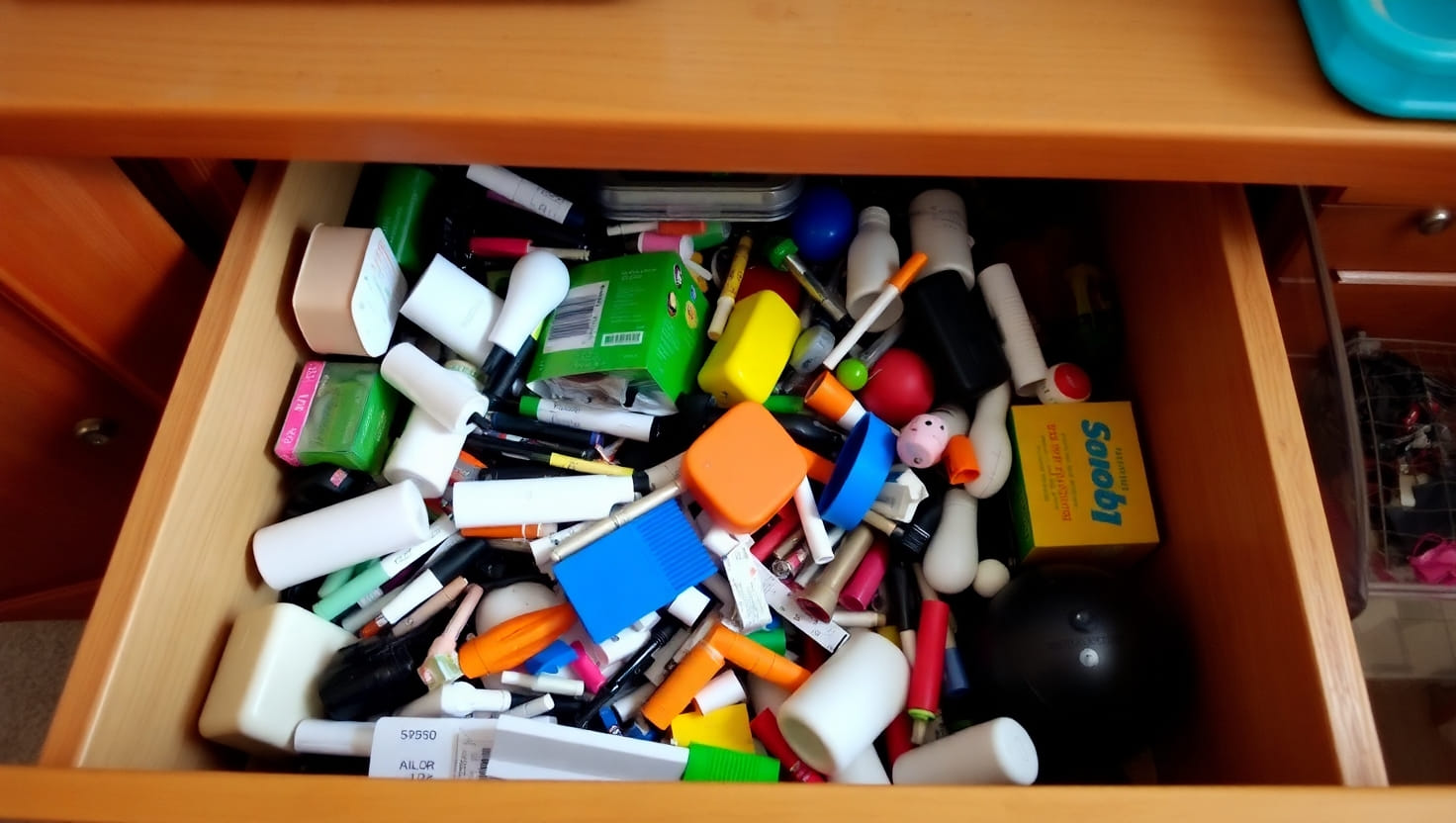
As you continue to declutter your home office, notice whether there’s physical room to pause and think. This might mean open desk space, an empty wall, or simply fewer items competing for your eyes.
Thinking space often emerges indirectly. As objects leave or shift, the room gains breathing room. That openness supports creativity and clarity more than any tool or system.
This doesn’t require large changes. Sometimes removing just a few visually loud items creates enough quiet for your mind to settle. It’s less about volume and more about contrast.
When the room includes space that isn’t assigned a task, it becomes more forgiving. You’re allowed to spread out, pause, or regroup without disruption.
Decluttering here isn’t about efficiency. It’s about allowing the room to support mental processes that can’t be rushed or contained.
Letting the room evolve instead of “finishing” it
There’s often an unspoken goal to finish decluttering, as if the room should eventually reach a final, stable state. Home offices rarely work that way.
Your work shifts. Your tools change. Your energy fluctuates. A room that adapts with you tends to stay calmer than one that’s locked into a single setup.
As you declutter your home office, consider leaving a little flexibility built in. Empty space, adjustable storage, and simple layouts make future changes easier.
This mindset reduces the pressure to get everything right now. You’re not creating a finished product. You’re creating a space that can respond over time.
When evolution is expected, small disruptions don’t feel like failures. They’re just signals that something needs adjusting again.
This approach encourages maintenance without rigidity. The room stays in conversation with your life instead of lagging behind it.
Recognizing when enough is enough for now
There’s a point in decluttering when continuing offers diminishing returns. The room feels lighter. Your mind feels clearer. Pushing beyond that point can reintroduce strain.
Learning to recognize “enough for now” is an important skill when you declutter your home office. Enough doesn’t mean perfect. It means supportive.
You might notice that you can work without irritation, find what you need without searching, and leave the room without guilt. Those are meaningful markers.
Stopping at enough protects the progress you’ve made. It allows you to associate decluttering with relief rather than exhaustion.
You can always return later with fresh eyes. Pausing doesn’t undo anything. It lets the changes settle into daily use.
When you honor enough, the room becomes a partner rather than a project. That relationship tends to last far longer than any single decluttering session.
When decluttering starts to feel different
At some point, decluttering shifts from being something you try to do into something that quietly works with you. It’s less about effort and more about alignment. The room holds steady. The habits don’t require constant restarting. You stop bracing yourself before you begin.
That shift usually doesn’t come from better willpower or stricter rules. It comes from understanding what made earlier attempts fall apart, and gently changing that pattern. Not all at once. Not perfectly.
If this process has felt calmer than what you’ve tried before, that’s not an accident. It’s often the first sign that a more sustainable way of decluttering is possible, one that fits into real life instead of fighting it.