Declutter Entryway Without Overthinking: A Calm, Room-First Reset That Actually Holds
A gentle, room-based approach to decluttering your entryway that reduces daily friction without turning it into a project.
The entryway is a small space that carries a surprising amount of weight.
It’s where the day begins and ends. It absorbs arrivals, departures, pauses, and distractions. And because it’s so transitional, it often becomes invisible until it feels heavy.
This isn’t a guide for creating a perfect first impression. It’s a quieter look at why the entryway collects so much, and how easing that pressure can change how the rest of the home feels.
Nothing here needs to be done all at once. There’s no finish line to reach. This is simply a way to look at the space with steadier eyes.
Why the Entryway Carries More Than Its Share
The entryway isn’t cluttered because you’re careless. It’s cluttered because it’s useful.
This is the place where items land before they have a next assignment. Bags pause here. Shoes wait. Mail needs a decision that hasn’t happened yet. The space becomes a holding pattern, not because anything is wrong, but because life moves quickly through it.
What makes the entryway feel heavier than other rooms is its visibility. You see it multiple times a day, often when you’re already switching mental gears. That repeated exposure adds up. Even small piles begin to feel loud simply because they’re encountered so often.
This is usually where people start to feel behind. Not because the space is large or complex, but because it never fully resets on its own. The constant motion keeps interrupting any sense of completion.
Understanding this matters. When you stop expecting the entryway to behave like a storage room or a display space, the tension eases. It isn’t meant to hold much. It’s meant to move things through.
That shift alone often makes decluttering feel less personal and more practical. The space isn’t failing. It’s just overworked.
Seeing the Difference Between Passing-Through and Staying-Here
One of the quiet problems in most entryways is confusion about what belongs there.
Some items are meant to pass through. Others are meant to stay. When those two categories blur, clutter forms without effort.
Passing-through items are temporary by nature. They’re connected to motion: keys in use, shoes worn today, bags needed tomorrow. Staying-here items support the function of the space itself: a mat, a light source, a place to sit or hang a coat.
When passing-through items lose their exit point, they start to linger. A bag that wasn’t unpacked becomes a fixture. Shoes that didn’t make it back to a closet quietly claim territory. Over time, the space feels crowded even though nothing new has been added.
This is usually where frustration builds. People try to organize without clarifying purpose, which leads to more containers and more decisions.
It helps to pause here, before touching anything, and notice which items are truly part of the entryway’s job. Not what’s convenient. Not what has always been there. Just what actually supports coming and going.
That distinction creates relief before any sorting begins. It narrows the field. The space starts to feel more cooperative, less demanding.
How Entryway Clutter Affects the Rest of the Home
The entryway has an outsized influence on how the entire home feels.
Because it’s the first space you encounter, it sets the tone. A crowded entryway doesn’t just feel messy. It subtly signals unfinished business. There are decisions waiting. There’s something to deal with.
That signal follows you. Even if the rest of the house is relatively calm, the unresolved feeling at the door can color your sense of the whole place. It’s a low-grade mental noise that’s easy to underestimate.
This is why entryway clutter often feels more draining than clutter elsewhere. It greets you when your energy is lowest and when your attention is already split. Over time, that repetition can create avoidance. People stop fully seeing the space because it feels like too much.
Decluttering here isn’t about aesthetics. It’s about reducing the number of micro-decisions you’re asked to make every day. Fewer objects mean fewer signals. Fewer signals mean a quieter start and end to the day.
When the entryway holds only what it needs, the rest of the home often feels easier without anything else changing. The nervous system registers the difference before the mind does.
Letting Go of the Idea That This Space Should Impress
Many entryways carry an unspoken job they were never meant to have.
They’re expected to look welcoming, stylish, organized, and representative of the whole home. That pressure adds another layer of strain, especially in a space that’s constantly in use.
When the entryway is treated like a showcase, everyday objects start to feel like intrusions. Shoes feel wrong. Bags feel messy. Practical items feel like failures instead of necessities.
This mindset makes decluttering harder. You’re not just deciding what to keep. You’re negotiating with an imagined standard that keeps shifting.
It can help to quietly release the idea that the entryway needs to explain your home to anyone. Its real purpose is private, not performative. It serves the people who live there, often at rushed or tired moments.
Once that expectation softens, choices become simpler. You’re no longer asking whether something looks right. You’re asking whether it supports coming and going without friction.
That’s a much kinder question. It creates room for function without apology and makes it easier to notice what’s truly getting in the way.
Starting With Space, Not Stuff
When people think about decluttering the entryway, they often start with objects.
What to remove. What to keep. What to donate.
But this space responds better when you start with emptiness.
Not as a goal, but as a reference point.
Imagining the entryway as briefly empty helps you see its shape and limits. You notice how narrow it is. Where movement happens. Where pauses naturally occur. This awareness makes later decisions feel grounded instead of reactive.
From here, it becomes clearer how little the space can comfortably hold. The question shifts from “Where can I put this?” to “Does this belong in a space this small and active?”
This approach reduces over-organizing. You’re less likely to add furniture or containers that compete with movement. You’re more likely to keep the floor clear and the pathways open.
Starting with space also slows the process. It keeps you from rushing into fixes that add complexity. The entryway doesn’t need many solutions. It needs breathing room.
That breathing room is often what people are actually craving when they say they want to declutter.
How Daily Exit Habits Quietly Create Piles
Most entryway clutter isn’t created in a moment of messiness. It’s created in motion.
Leaving the house is usually rushed, fragmented, and mentally full. You’re thinking ahead, already gone before your body follows. In that state, items get set down instead of put away—not out of neglect, but out of momentum.
Keys land wherever your hand opens. Shoes come off where your feet stop. Bags drop at the first flat surface. These choices make sense in the moment. The problem isn’t the habit itself. It’s that the habit repeats without a natural reset.
Over time, those “temporary” placements become default locations. The entryway quietly absorbs them, and the piles feel permanent even though they were never intended to be.
This is where people often get frustrated with themselves. They notice the clutter but can’t trace how it formed. It feels like it appeared overnight, even though it built slowly through ordinary days.
Seeing this pattern matters because it shifts the focus away from discipline and toward design. The issue isn’t follow-through. It’s that the space doesn’t gently guide items to their next step.
Once you recognize that clutter here is the result of constant transitions, not laziness, the tone changes. You can start thinking about the entryway as a buffer zone that needs clear rules—not a storage area that’s failing its job.
The Hidden Cost of “Just Setting It Down”
There’s a particular kind of clutter that feels harmless at first.
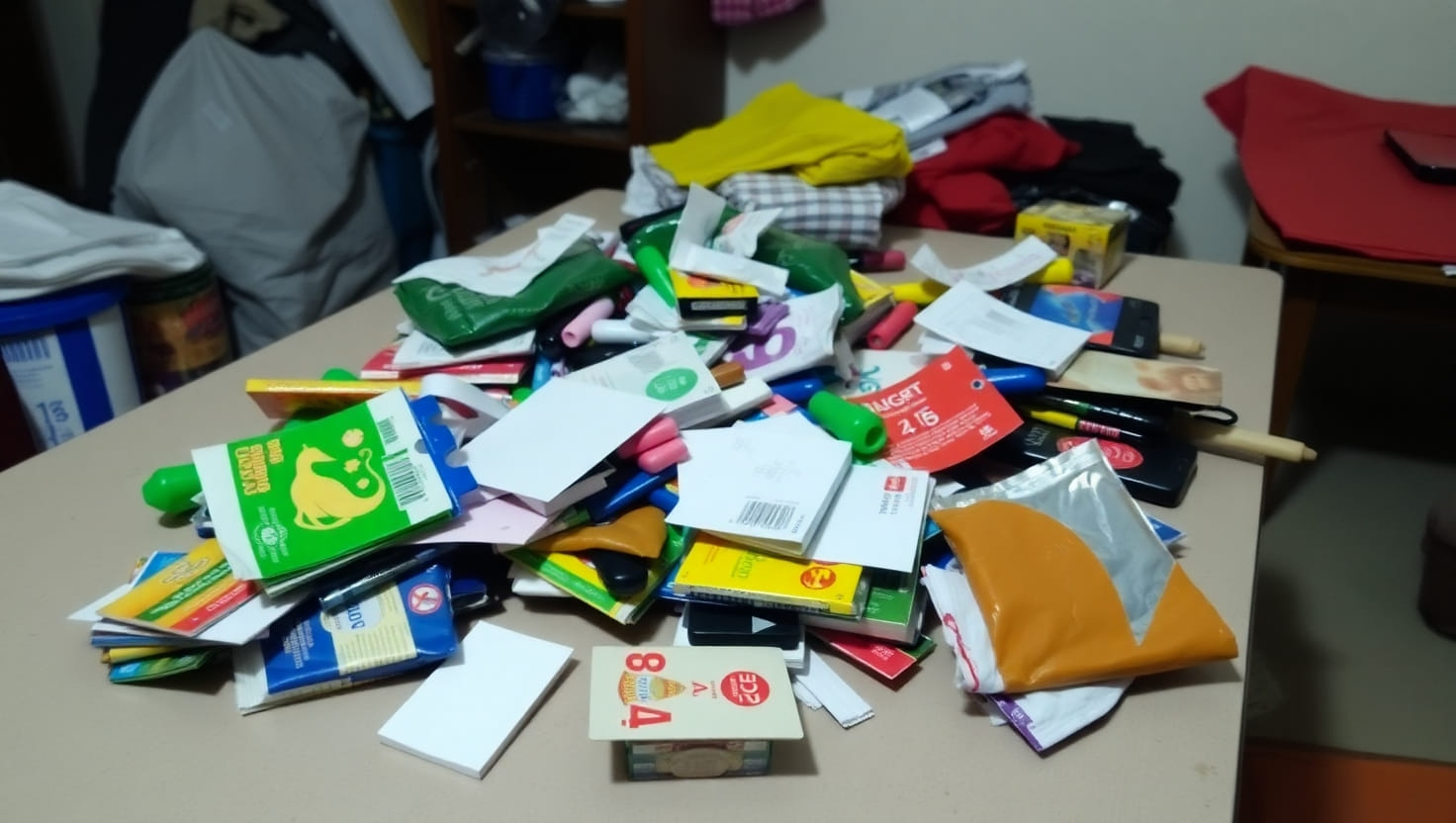
It’s the item you place down with full intention to move later. Mail that needs sorting. A bag you’ll unpack tonight. Shoes you’ll put away tomorrow. Each decision feels reasonable, even responsible.
The trouble comes from accumulation. One item becomes three. Three become a small cluster. And that cluster begins to broadcast something unfinished every time you walk past it.
This type of clutter is draining because it’s mentally active. It’s not neutral background. Each piece holds a reminder: decide this, deal with that, don’t forget. The entryway becomes a message board you never asked for.
What makes this especially tiring is that these reminders show up when you’re least equipped to handle them—on the way out, already late, or on the way in, already depleted.
Over time, the space starts to feel tense. You may not consciously think about it, but your body registers the buildup. You step around things. You avert your eyes. You hurry through.
Decluttering the entryway often means reducing the number of items that carry future decisions. When fewer objects are waiting on you, the space quiets down. It stops asking questions every time you pass through.
That quiet is often what people notice first—not neatness, but relief.
When Storage Solutions Become Part of the Problem
It’s common to respond to entryway clutter by adding structure.
A bench with cubbies. Extra hooks. Another basket. Each addition is meant to help, and sometimes it does—briefly.
But in small, high-traffic spaces, storage can quickly tip from helpful to heavy. More places to put things often means more things stay there. The space fills to the capacity you give it.
This isn’t a failure of organization. It’s a predictable pattern. When storage is abundant, the entryway stops being selective. Items that don’t truly belong linger simply because there’s room.
Another quiet issue is visual density. Even well-organized storage can create a crowded feeling if every surface is active. The eye has nowhere to rest, and the space feels busier than it is.
Before adding anything new, it helps to notice what existing storage encourages. Does it support quick exits and easy returns? Or does it invite long-term holding?
Sometimes decluttering the entryway means removing storage, not adding it. Fewer hooks can mean fewer coats live there year-round. Fewer baskets can mean fewer unresolved items accumulate.
This kind of subtraction often feels risky at first. But when the space is allowed to be simpler, it often becomes more functional, not less.
Why Seasonal Drift Makes Entryways Feel Unmanageable
Entryways change with the seasons, but they rarely reset completely.
Cold-weather gear arrives. Lighter items retreat. Then the cycle reverses. Each transition leaves behind a few stragglers—a scarf, a pair of shoes, a bag that no longer fits the weather but never made it out.
Over time, these layers stack. The entryway becomes a record of past seasons instead of a support for the present one.
This drift is easy to miss because it happens gradually. Nothing feels obviously wrong until the space feels crowded all the time. At that point, it can be hard to tell what actually belongs.
Seasonal clutter often carries a subtle emotional weight. These items are connected to routines, roles, and expectations that have shifted. Letting them go—or even moving them—can feel like more work than it should.
What helps here is narrowing the time frame. The entryway doesn’t need to support the whole year. It only needs to support now.
When the space is aligned with the current season, it naturally holds less. Decisions get simpler. The visual field clears without dramatic effort.
This isn’t about purging seasonal items. It’s about relieving the entryway of the responsibility to remember everything at once.
Creating an Entryway That Resets Itself
The most supportive entryways have one thing in common.
They gently reset without requiring motivation.
This doesn’t mean they stay perfect. It means they don’t accumulate endlessly. Items either move through or clearly belong.
Self-resetting spaces rely on clarity more than discipline. When there’s an obvious place for the few things that live there, it’s easier to complete the cycle of arrival and departure.
The reset often happens in small moments. Hanging a coat because the hook is right there. Setting keys down because there’s only one surface meant for them. Taking shoes a step further because the entryway doesn’t invite them to stay.
What’s important here is restraint. The fewer roles the space plays, the better it performs. When the entryway isn’t asked to store, organize, and display at the same time, it can do its actual job more easily.
A space that resets itself doesn’t ask you to try harder. It quietly makes the next right action the easiest one.
That ease is what allows decluttering to hold. Not because you changed, but because the space stopped working against you.
Separating Convenience From Long-Term Belonging
One reason entryways quietly fill up is that convenience often wins by default.
An item is placed where it’s easiest, not where it belongs long-term. Over time, convenience starts to masquerade as logic. The entryway becomes home to things simply because they were set down there often enough.
This is understandable. The entryway sits at the intersection of movement and fatigue. It catches items when attention is thin. But convenience-based placement has a cost. It slowly redefines the space, asking it to hold more than it should.
Long-term belonging is different. It asks whether an item genuinely needs to live at the point of entry. Not whether it’s used frequently, but whether its use is tied to coming or going.
When those two ideas separate, decisions soften. You don’t have to judge the item itself. You’re just clarifying its relationship to the space.
This distinction often reduces the pile-up of “almost right” objects—the ones that sort of make sense but never quite settle. Once convenience stops being the deciding factor, the entryway naturally sheds excess.
The space becomes clearer not through effort, but through alignment. Items that don’t truly belong drift elsewhere, and the entryway regains its narrow, focused role.
How Visual Interruptions Increase Mental Load
Even when an entryway isn’t physically full, it can still feel busy.
This usually happens when there are too many visual interruptions. Patterns, stacks, mixed materials, and overlapping items all compete for attention. The eye doesn’t know where to land, so the brain stays slightly alert.
That alertness is subtle but persistent. Every pass through the space requires a small amount of processing. Over a day, those moments add up.
What’s tricky is that visual clutter isn’t always tied to volume. A few poorly placed items can feel heavier than a larger number of well-contained ones. Height, contrast, and spread matter as much as quantity.
Decluttering here often means reducing interruption, not removing everything. Lowering the number of visible edges. Creating more empty space between objects. Letting some areas go quiet.
When visual noise drops, the space feels calmer even before anything major changes. Movement through it becomes smoother. You stop bracing without realizing you were.
This kind of ease is hard to quantify, but easy to feel. It’s one of the clearest signals that an entryway is supporting you instead of asking something from you.
The Role of the Floor in How the Space Feels
Floors in entryways do a lot of silent work.
They carry the visual weight of everything else. When the floor is crowded, the entire space feels compressed. When it’s mostly clear, the room feels larger and calmer, even if the walls are active.
Shoes are usually the main issue here. They’re bulky, varied in shape, and quick to multiply. Even a few pairs can make the space feel blocked, especially near the door.
What’s important isn’t whether shoes are visible, but whether they interrupt movement. When you have to step around things, your body registers friction before your mind does.
A clearer floor often changes how the entryway is experienced more than any other adjustment. It restores a sense of flow. Walking in and out becomes easier, less cautious.
This doesn’t require perfection. A lived-in space can still have a mostly open floor. The key is noticing how quickly floor clutter escalates the feeling of mess.
When the floor is given priority, other decisions often follow naturally. The space starts to organize itself around movement instead of storage.
Why Entryways Benefit From Fewer Decisions
Every object in the entryway asks something of you.
Where does this go. Is this staying. Do I need this later. Each question may be small, but together they create decision fatigue in a space meant for transition.
This is why simplifying the entryway often feels disproportionately relieving. Fewer objects mean fewer decisions at moments when your capacity is already limited.
A space with fewer options is easier to maintain, not because you’re trying harder, but because there’s less to consider. Actions become automatic instead of negotiable.
This is especially helpful at the edges of the day, when mental energy is lowest. You don’t want to evaluate. You want to move.
Decluttering here isn’t about minimizing for its own sake. It’s about removing unnecessary choice points. When the environment is clearer, behavior follows without effort.
The entryway works best when it asks almost nothing of you. It should support the rhythm of leaving and returning, not interrupt it with constant micro-decisions.
Allowing the Entryway to Be Slightly Imperfect
A final pressure that keeps entryways from staying clear is the idea that they should remain finished.
In reality, this space will always be in motion. Expecting it to stay pristine sets it up to fail. The smallest disruption can feel like a setback, which makes maintenance feel pointless.
What helps is allowing for a narrow range of acceptable mess. A small amount of disorder that’s expected and tolerated. This keeps the space flexible without letting it slide into overwhelm.
When imperfection is planned for, it doesn’t feel personal. A pair of shoes out doesn’t mean the system failed. It just means the space is being used.
This mindset makes decluttering stick because it removes the all-or-nothing tension. You’re no longer aiming for a static ideal. You’re supporting a living process.
An entryway that can absorb a little mess without collapsing stays calmer over time. It resets more easily. And it feels more forgiving to move through, even on hard days.
That forgiveness is often what allows the space to stay lighter, longer.
When Decluttering Stops Being a One-Time Effort
For many people, the hardest part of decluttering isn’t getting started. It’s keeping the changes from quietly unraveling.
Entryways make this especially clear. They respond quickly to small shifts, but they also reveal when a system doesn’t fit real life. If you’ve ever reset the space only to watch it slowly fill again, there’s nothing unusual about that.
Lasting ease usually comes from understanding why certain approaches fade and others hold. Not more rules. Not more motivation. Just a different relationship with the process itself.
That realization is often where decluttering begins to feel steadier, and less temporary.